Canadian provincial governments have moved gradually but consistently toward restricting cosmetic pesticide and fertiliser use on residential lawns, particularly near waterways and in sensitive urban watersheds. Ontario’s Nutrient Management Act, Quebec’s Regulation Respecting the Reduction of Pollution from Agricultural Sources, and BC’s Environmental Management Act each establish frameworks that, while aimed primarily at agricultural operations, increasingly inform municipal bylaws governing residential lawn inputs.
The practical implication for homeowners is that phosphorus applications on established turf are restricted or banned outright in many Canadian municipalities. High-phosphorus lawn fertilisers (common in US-sold products with formulations like 29-3-4) are being replaced by low- or zero-phosphorus options designed for maintenance applications on established grass where soil phosphorus is not limiting.
Why phosphorus is the first target
Phosphorus binds strongly to soil particles but is released when soil is disturbed or eroded. Urban storm drainage systems carry phosphorus-laden runoff from fertilised lawns into storm sewers that discharge directly into rivers and lakes—bypassing wastewater treatment entirely. The resulting elevated phosphorus levels contribute to algal bloom cycles in Lake Erie, Ottawa River tributaries, and Georgian Bay inlets that have worsened over the past two decades.
Established Canadian residential turf almost never has a genuine phosphorus deficiency. Soil phosphorus accumulates over years of maintenance applications and rarely depletes in lawns that are not being stripped of topsoil. A basic soil test costing $30–50 through a provincial agricultural laboratory will confirm whether any phosphorus addition is warranted before purchase.
Organic nitrogen sources: how they work
Organic nitrogen sources (composted manure, blood meal, feather meal, soy-based products) release nitrogen through microbial mineralisation rather than direct chemical availability. The mineralisation process requires soil temperatures above 10 °C and adequate moisture—conditions that align naturally with the Canadian growing season, making organic sources an inherently self-regulating option.
The main limitation of purely organic nitrogen products is lower analysis (typically 5-0-0 to 10-0-0) compared to synthetic products (30-0-4 or similar), meaning larger application volumes are needed to deliver equivalent nitrogen. For most residential lawns under 500 m², this is manageable. Larger properties may find a blended organic-synthetic product (sometimes marketed as “bridge” fertilisers) more practical while still meaningfully reducing synthetic input loads.
Compost top-dressing: the most underused technique
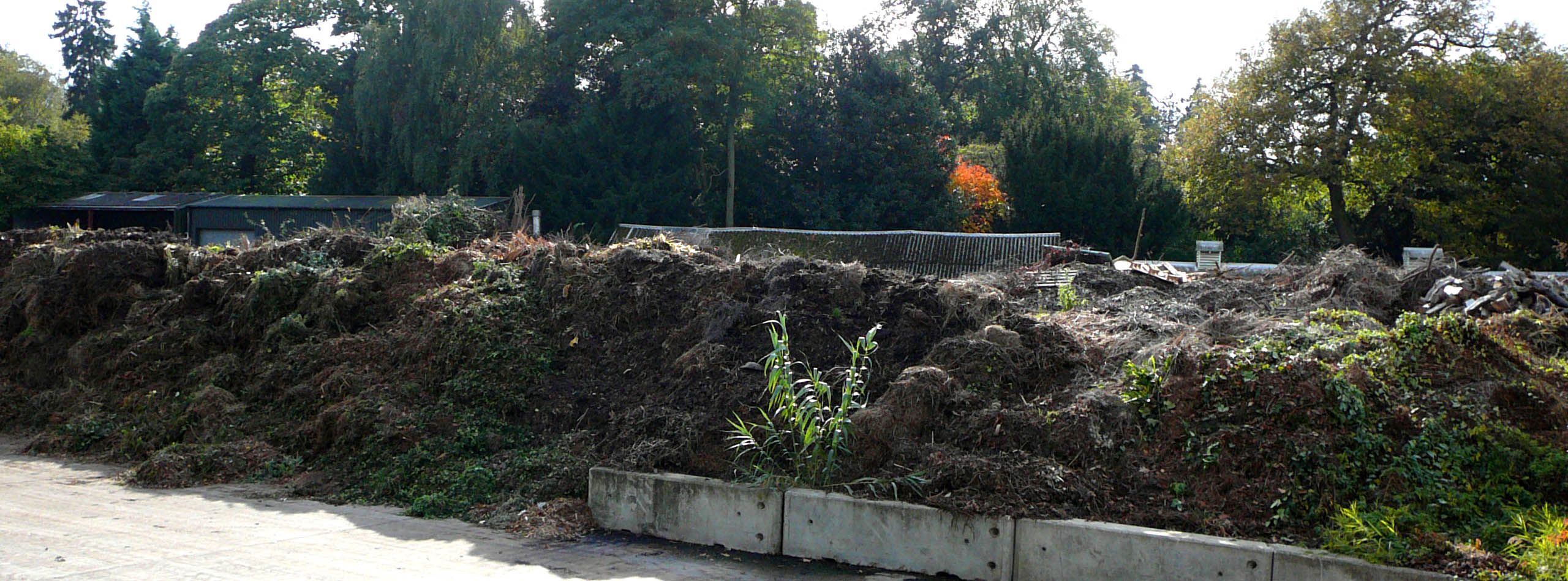
Applying 0.5–1 cm of finished compost across turf immediately after core aeration is the single most impactful long-term soil improvement strategy available to residential lawn managers. The compost works into the aeration holes, introducing organic matter, beneficial microorganisms, and slow-release nutrients directly into the compacted soil profile.
Over three to five seasons of annual compost application, soil organic matter levels measurably increase, water infiltration improves, and the turf’s resilience during summer drought increases as the improved soil structure retains moisture more effectively. The approach is used routinely on municipal park turf in progressive Canadian cities precisely because it reduces long-term synthetic input requirements.

Finished compost for top-dressing should be screened to 5 mm particle size or finer to allow it to settle into the turf canopy rather than sitting on the surface. Municipal composting programs in Ottawa, Toronto, Calgary, and Vancouver typically produce finished compost that meets this specification and sell it in bulk at reasonable cost.
Slow-release synthetic options
Not all synthetic fertilisers carry the same environmental risk profile. Polymer-coated urea and methylene urea products release nitrogen over 8–16 weeks rather than the 2–4 week window of conventional soluble urea. The extended release window reduces the risk of nitrate leaching following rain events and produces more even, sustained growth rather than the flush-and-lag pattern associated with quick-release nitrogen.
For Canadian conditions, a product releasing 60–70% of its nitrogen over 90 days aligns well with the growing season duration in most zones. Applied in late April or early May, a single application at 0.5 kg actual N per 100 m² can provide adequate nutrition through to mid-summer when a follow-up fall application handles September requirements.
Soil testing and pH management
Cool-season Canadian turf performs best in soil with a pH of 6.0–7.0. Repeated applications of ammonium-based nitrogen fertilisers gradually acidify soil below this range, reducing microbial activity and nutrient availability even when adequate nutrients are present. A soil test every two to three years identifies pH drift early enough for a lime application to correct it without major disruption.
Agricultural lime (calcium carbonate) applied at rates specified by the soil test result is the standard correction. Apply in autumn, as the freeze-thaw cycle through winter helps work the lime into the soil. Dolomitic lime (containing both calcium and magnesium) is appropriate when the test also identifies magnesium deficiency, which is more common in sandy or highly leached Ontario and Atlantic Canada soils.
Nitrogen from grass clippings
Leaving clippings on the lawn surface after mowing returns approximately 25% of the total nitrogen applied to that turf over the season—effectively providing one free fertiliser application per year. The practice, sometimes called “grasscycling,” has no measurable effect on thatch accumulation when mowing height is maintained correctly and clippings are not removed in excess.
The requirement is that no more than one-third of the blade length is removed in any single cut, and that mowing frequency keeps pace with growth rate. During the rapid growth phase in late April and May, this may mean cutting twice weekly. During the slower summer period, once per week typically suffices.
Reference resources
- Agriculture and Agri-Food Canada: Nutrient Management
- Ontario Ministry of Environment: Lawn Fertilizer Regulations
- BC Ministry of Environment: Organic Waste and Composting
Nutrient management regulations vary by province and municipality. The general approaches described here are widely applicable across Canada but should be verified against local bylaws before application. Consult a certified agrologist or horticulturist for site-specific fertilisation plans.